Posts

WHAT IS THE BEST MATERIAL FOR HYDRAULIC CYLINDER TUBE AND ROD
Image
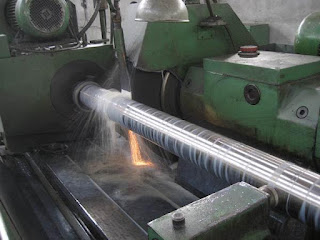
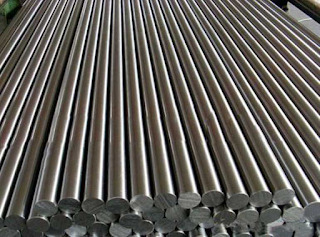
  An important factor that when manufacturing   hydraulic cylinder tube and rod ,the quality of steel materials.   Datong Hydraulic   work with the best materials for durable, high performance hydraulic cylinder tube and rod. Ideal properties for hydraulic cylinder materials include resistance to wear and corrosion, light weight, machinability, and low cost. Here are some of the most commonly used materials: STAINLESS STEEL TYPE 304 Type 304 Stainless is one of the most widely used materials in  hydraulic cylinder barrel  and piston rod. Type 304 Steel is not only resistant to corrosion but is also easily available and environmentally friendly. Stainless steel 304 is durable in acidic environments and does not wear easily. TITANIUM ALLOY GRADE  When used to manufacture hydraulic cylinders, titanium grade provides corrosion resistance and impeccable strength. It is also easy to machine or form, and is relatively lightweight for its strength - one of the...

hard chrome plating bar/induction hardened chrome bar/hydraulic cylinder...

Image

HOW TO STRENGTHEN THE PERFORMANCE OF CYLINDER BARREL

  Hydraulic cylinder  is basically composed of  cylinder barrel  and cylinder head, piston and  piston rod , sealing device and so on, if we want to strengthen its performance how to do it? 1. Using NUMERICAL control electro-hydraulic servo valve to control hydraulic cylinder can realize linear and real-time control of output, so as to improve the performance of hydraulic cylinder; 2, the cylinder has strength, can withstand dynamic working pressure, long time working without deformation; 3, stiffness, under the piston side force and installation reaction force will not bend; 4, less friction between the inner surface and guide parts and seals, can be used for a long time; 5, cylinder and flange to good welding, no cracks. 6, to correctly install the sealing device around the  hydraulic cylinder : pay attention to the installation direction when installing the sealing ring, to avoid oil leakage due to the installation, the lip should deal with the pressure ...

WHAT IS THE DIFFERENCE BETWEEN CASE HARDENING AND INDUCTION HARDENING?

Image
  Case hardening is a method of hardening an iron alloy that generally has too little carbon in it to undergo sufficient hardening throughout the material. This is usually about 0.5% carbon at the lower limit. Additional carbon-bearing material is packed around the part, then heated until the low-carbon steel becomes a solid solution, allowing the surrounding carbon outgassing from the heated carbon-bearing material to dissolve into the steel to a degree, not unlike dissolving sugar into hot water. Being a solid, and a metal at that, carbon can only dissolve into a low-carbon steel to certain depth, typically no more than 100–200 micrometers. This gives a case-hardened part good surface hardness, but the interior of the part will not harden as well, or at all, depending on the material used. Induction hardening  isn’t really a chemical process like case-hardening, at least not in the same way. Induction hardening uses alternating frequency passing through a coil (the primary) ...

WHAT IS DEAD ROLLER SHAFT AND LIVE ROLLER SHAFT

 live shaft and dead shaft rollers can be used for the same application and the choice is a function of the machine’s mounting system. But at other times, the differences between the two designs mandate a clear choice.  DEAD  ROLLER  SHAFT S: Roller design is bearings pressed into the ends of a hollow tube (the roller body) with a long shaft running through the bearings and extending out the ends of the rollers. The roller is considered to be a “dead shaft” because the shaft does not turn. The shaft is fixed to the machine or frames mounting system by clamping or bolting and the roller body turns about the shaft via the bearings. Roller shells can be steel, aluminum, or carbon fiber and many times are thin-walled, making them ideal for light load and high-speed web applications. Commonly used as idler rollers due to light-weight, low-turning inertia and the availability of low friction bearings which reduce roller drag. Roller rods  must be web or nip driven bec...

What is the process of hard chrome plating?

Image
  Hard chrome plating   is a process in which a layer of chromium is applied to a surface to improve corrosion and abrasion resistance, reduce friction, and extend the life of parts used in extreme wear conditions. Hard chrome plating demonstrates excellent hardness and lubricity, and is the premier engineering choice to reduce friction, minimize wear and prevent galling. These characteristics are applicable for critical engineering applications, including: machine tool cutting surfaces, cylinder bores, strut rods, crankshafts and  hydraulic shafts . Hard chrome is also applied to molds because of its low surface energy and resultant release properties. Chem Processing can hard chrome plate steel, aluminum, or copper materials, as well as many exotic alloys. Hydraulic cylinder rods , bearing fits and seal areas frequently get damaged and worn from heavy use. When no longer functional, a part can be hard chrome plated and polished or ground back to OEM Spec. This process c...

Hydraulic Honing Tube/Honed Barrel/Cylinder Barrel/Cylinder Tube/Hydraul...

Image