Posts

Showing posts with the label telescopic hydraulic cylinder

The Factors Affecting the Service Life of Telescopic Hydraulic Cylinders

Image
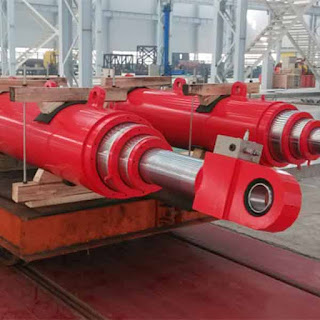
  Telescopic hydraulic cylinders are critical components in heavy-duty applications such as construction machinery, material handling, and agricultural equipment. Their durability directly impacts operational efficiency and maintenance costs. While multiple factors influence their lifespan, understanding these challenges allows companies to innovate and deliver superior products. Below are key factors affecting service life, with insights into how DATOG HYDRAULIC addresses them to ensure longevity and reliability. 1. Material Quality and Manufacturing Precision The choice of materials and manufacturing accuracy are foundational to a cylinder’s performance. Low-grade steels or alloys may deform under high loads, while poor machining tolerances can lead to uneven wear or internal leakage. DATONG use high-strength, corrosion-resistant materials such as CK45 chromed piston rods and E355 ST52 cylinder tubes .  Our CNC machining and automated welding processes ensure micron-level...

Datong Hydraulic/3-stage telescopic cylinder/hydraulic cylinder design/O...

Image

Telescopic Hydraulic Cylinder Application And Pressures

Image
  A  telescopic hydraulic cylinder  can be used in several types of applications that require a linear force to be applied over a long distance. While a rod cylinder could potentially perform the job it may be too long when fully collapsed, where as a telescopic cylinder will typically be significantly shorter when in the same position. The collapsed package size plus long stroke capability of a telescopic cylinder is one of the advantages the design offers over a rod cylinder. Rod cylinders will apply the same force throughout their stroke, assuming that system pressure remains constant. While it is possible to design a telescopic cylinder that applies a constant force, the cost is significantly increased. Generally a  telescopic cylinder  will be used in applications where a constant force is not required. Both single acting and double acting telescopic cylinders are used in non-constant force applications. The most common of these in mobile applications are d...

What is a telescopic hydraulic cylinder?

Image
  Telescopic hydraulic cylinders , sometimes called multi-stage cylinders, are a type of linear actuator consisting of a series of tubular rods called sleeves. The sleeves (usually four or five) sequentially decrease in diameter and are nested inside of each other. Once hydraulic pressure is introduced to the cylinder, the largest sleeve (called the main or barrel) is extended first. Once the barrel has reached its maximum stroke, the next sleeve, usually referred to as a stage, begins to extend. This process continues until the cylinder reaches its last stage, called the plunger. There are two different types of telescopic hydraulic cylinders— single-acting cylinders  and double-acting cylinders. Single acting, by far the most common, work by using gravity or some other external force to retract the stages of the cylinder. As soon as pressure is released from the cylinder, the force of the load pushes oil out of the system and the cylinder retracts. While pneumatic telescopic...